
Eating during your period: how to support your body through movement
Exercise during your period: fine, and often helpful. Which kinds of movement feel good, what to eat, and why iron matters right now.
Key takeaways
- Exercise during your period is medically safe, and gentle movement like yoga, walking or calm cycling eases cramps for many women.
- A Cochrane review found a clear drop in pain intensity from exercise, even though the individual studies were small and of low quality.
- Iron-rich foods such as lentils, spinach, oats or red meat make up for the loss through bleeding, and a little vitamin C helps your body absorb plant iron better.
- According to the German Nutrition Society's reference value, menstruating women need around 16 milligrams of iron a day; with heavy bleeding and a meat-light diet, the risk of deficiency rises sharply.
- On low-energy days you can dial the intensity down or stop altogether without losing progress.
Exercise during your period is fine, and for many women it actually helps. Gentle movement like yoga, walking or easy cycling can ease cramps. When it comes to food, iron-rich meals help make up for the blood you lose. One thing matters most: listen to your body. Nothing here is compulsory.
Contents
- Am I allowed to exercise during my period?
- Which kinds of exercise feel good during your period?
- Can movement ease period pain?
- What should you keep in mind when training?
- What should you eat during your period?
- Why does iron matter so much during your period?
- Which foods tend to slow you down?
- Common questions about exercise and food during your period
Am I allowed to exercise during my period?
Yes, without any concern. There is no medical reason to skip movement during your period. Quite the opposite: for many women, gentle exercise helps with exactly the typical complaints, so cramps, tiredness and that heavy feeling in your belly.
Something many women don't know: at the start of your period, your oestrogen and progesterone are at their lowest. That can feel tiring and leave you less capable. But it can also be the moment when a hard effort comes more easily. How you feel is individual, and it may differ from day to day.
The rule of thumb is simple: if you feel like moving, move. If you feel like resting, rest. Both are completely fine and have nothing to do with discipline.
Which kinds of exercise feel good during your period?
Whatever feels easy to you. In the first few days, most women find gentle activities more pleasant than a hard session. Good options include:
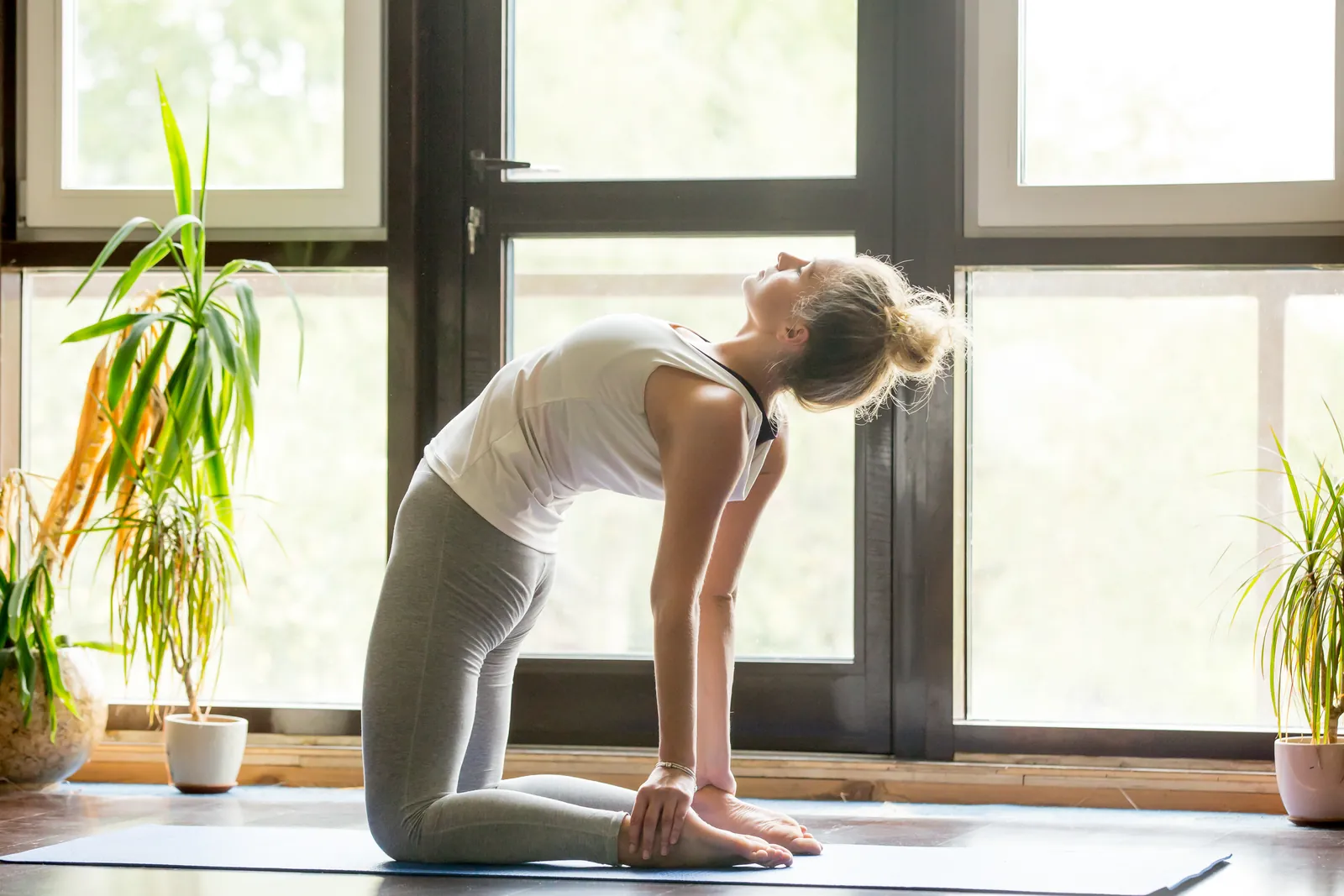
- Yoga and stretching: relaxes your lower back and belly and helps release tension.
- Walking at an easy pace: gets your circulation going gently, without overdoing it.
- Cycling calmly: supports blood flow in the pelvis and is easy to dose.
- Swimming: no problem during your period either, with a tampon or menstrual cup.
- Light strength training: fine if you feel up to it. Go by feel, not by personal bests.
If you feel strong and full of energy on some days, there's nothing wrong with a more intense workout either. Your body gives you the signal, you just have to take it seriously. This isn't about gritting your teeth, it's about feeling good.
Can movement ease period pain?
Yes, there's a fair bit in favour of it. A Cochrane review looked at exercise for period pain. The result: exercise can reduce pain intensity considerably. The individual studies were small and of rather low quality, but the effect was large enough to make a noticeable difference for the women affected.
The reasons are fairly clear. Movement supports blood flow in the pelvis and counteracts the cramping contractions. Your body also releases endorphins when you exercise, the body's own messengers that can dampen how you perceive pain. So a walk or a gentle yoga session is often worth more on cramp days than you might expect.
What should you keep in mind when training?
Mainly treating yourself well. A few points help you match your movement to how you feel:
Adjust the intensity. On heavy days it can be calmer. Swapping a planned interval session for a walk is not a step backwards.
Drink enough. Your body may retain more water during your period, but drinking enough still helps you feel less sluggish.
Mind your pelvic floor. If you feel heavy or cramped, very high loads and heavy lifting aren't the best idea right now. Gentle movement usually feels better.
And the most important point: pause without shame. If your body needs rest, rest is the right decision. You won't lose progress, you're just giving your body what it needs at that moment.
What should you eat during your period?
Ideally balanced, with a focus on iron. While you bleed, your body loses iron along with the blood. So it helps to reach for iron-rich foods on these days. These include:
- Plant sources of iron: pulses such as lentils and chickpeas, plus spinach, oats, pumpkin seeds and wholegrain foods.
- Animal sources of iron: red meat contains iron in a form your body absorbs particularly well.
- Vitamin C as a booster: combine plant iron with a little vitamin C, such as peppers, orange or a squeeze of lemon. That improves absorption noticeably.
Beyond that, the usual applies: regular meals, enough fluids and foods that give you energy. Magnesium-rich foods like nuts, oats or a bit of dark chocolate feel pleasant to many women on cramp days. If you fancy something warm, a soup or stew is often exactly right.
Why does iron matter so much during your period?
Because monthly bleeding means women need more iron than men. The reference value from the German Nutrition Society for menstruating women is around 16 milligrams a day, clearly more than for men. The reason is exactly this regular blood loss.
It becomes especially relevant with heavy bleeding. According to an analysis by the German professional association of gynaecologists, heavy period bleeding raises the risk of iron deficiency roughly threefold on average. A diet low in meat raises it by 3.5 times. Put both together and the risk climbs to 13.5 times. That doesn't mean you have to eat meat, but if you eat little meat and bleed heavily, pay particular attention to your iron intake.
Iron deficiency often creeps up on you, with tiredness, trouble concentrating, declining performance or low mood. If you notice signs like these, especially alongside heavy bleeding, have your iron levels checked at your practice instead of taking high-dose supplements on your own.
Which foods tend to slow you down?
An honest look is worth it here, because no food is off limits. It's more about what feels uncomfortable for some women. Very salty meals can increase water retention and with it the bloating. A lot of caffeine can add to inner restlessness and disturb sleep in sensitive people.
Coffee and black tea have one small side effect too: they inhibit the absorption of plant iron if you drink them with an iron-rich meal. If you are watching your iron intake, have your coffee or tea a while before or after eating rather than alongside it.
None of this is a ban. If a piece of chocolate or a coffee does you good, enjoy it. How you feel counts for more than a rigid rule.
Common questions about exercise and food during your period
Is exercise during your period unhealthy?
No. There is no medical reason to skip exercise during your period. Gentle movement can even help with cramps and tiredness. What matters is matching the intensity to how you feel and allowing yourself rest on low-energy days.
Which exercise is best during your period?
Whatever feels easy to you. Popular choices are yoga, walking, calm cycling and swimming. If you feel up to it, more intense training is fine too. There is no fixed rule, your own sense of your body decides.
Can I go swimming on my period?
Yes. With a tampon or a menstrual cup you can swim without any trouble. Both catch the blood reliably. After swimming you simply change them as usual.
What should I eat during my period?
Go for iron-rich foods like lentils, spinach, oats or red meat, and combine plant iron with a little vitamin C. Otherwise: eat a balanced diet, keep meals regular and drink enough. Many women find warm food such as soup pleasant on cramp days.
Why am I hungrier during my period?
Appetite can go up around your period, and plenty of women notice this. Part of it is linked to the hormone shifts across your cycle. Go ahead and eat a bit more during this time, ideally filling, nutrient-dense foods that give you energy.
Does magnesium help with period pain?
Possibly. The evidence is mixed and clear proof is missing. Since magnesium matters for your muscles anyway, there's little reason not to get it through food such as nuts, oats or pulses. For supplements, discuss the dose with your pharmacy or practice.
Should I avoid coffee during my period?
You don't have to give it up. But a lot of caffeine can add to restlessness and sleep problems if you are sensitive. Also drink coffee a while apart from iron-rich meals, because it can inhibit iron absorption.
This article is general information and does not replace medical advice. If your symptoms are severe, unusual or persistent, please speak to your gynaecologist.
FAQ
Is exercise during your period unhealthy?
No. There is no medical reason to skip exercise during your period. Gentle movement can even help with cramps and tiredness. What matters is matching the intensity to how you feel and allowing yourself rest on low-energy days.
Which exercise is best during your period?
Whatever feels easy to you. Popular choices are yoga, walking, calm cycling and swimming. If you feel up to it, more intense training is fine too. There is no fixed rule, your own sense of your body decides.
Can I go swimming on my period?
Yes. With a tampon or a menstrual cup you can swim without any trouble. Both catch the blood reliably. After swimming you simply change them as usual.
What should I eat during my period?
Go for iron-rich foods like lentils, spinach, oats or red meat, and combine plant iron with a little vitamin C. Otherwise: eat a balanced diet, keep meals regular and drink enough. Many women find warm food such as soup pleasant on cramp days.
Why am I hungrier during my period?
Appetite can go up around your period, and plenty of women notice this. Part of it is linked to the hormone shifts across your cycle. Go ahead and eat a bit more during this time, ideally filling, nutrient-dense foods that give you energy.
Does magnesium help with period pain?
Possibly. The evidence is mixed and clear proof is missing. Since magnesium matters for your muscles anyway, there's little reason not to get it through food such as nuts, oats or pulses. For supplements, discuss the dose with your pharmacy or practice.
Should I avoid coffee during my period?
You don't have to give it up. But a lot of caffeine can add to restlessness and sleep problems if you are sensitive. Also drink coffee a while apart from iron-rich meals, because it can inhibit iron absorption.
Discussion
Loading comments …