
Period pain: causes, warning signs and what you can do yourself
Period pain, what helps? Why menstruation hurts, what causes it, what eases cramps and when to see a doctor.

Key takeaways
- Period pain happens because the womb contracts to shed its lining. Messenger substances called prostaglandins drive these cramps.
- For mild to moderate pain, heat, gentle movement and, if needed, anti-inflammatory painkillers such as ibuprofen taken early often help.
- Primary period pain usually starts within the first year after your first period and has no underlying disease behind it.
- If your familiar pattern changes, the pain increases or tablets barely work any more, a physical cause may be behind it, such as endometriosis, adenomyosis or fibroids.
- After stopping the pill the natural cycle with ovulation returns, and with it the pain can come back.
Period pain usually happens because your womb contracts to shed its lining. Messenger substances called prostaglandins drive these cramps. For mild to moderate pain, heat, movement and, if needed, anti-inflammatory painkillers often help. Very severe pain, though, is not something you have to accept and should be checked out.
Contents
- What is period pain, exactly?
- Why does your period hurt at all?
- Primary or secondary period pain: what's the difference?
- What causes severe period pain?
- What can you do yourself about period pain?
- When should you see a doctor about period pain?
- How does the medical assessment work?
- Why does your period suddenly hurt after stopping the pill?
- Four stubborn myths about period pain
- Common questions about period pain
What is period pain, exactly?
Period pain means cramping or dragging pain in the lower abdomen that starts shortly before or with your period. The medical term is dysmenorrhoea. It often radiates into the lower back or the thighs. Sometimes nausea, headaches, diarrhoea or a general sense of weakness come with it.
You are not alone in this. Period pain is one of the most common reasons why menstruating people temporarily cannot work or go to school. Many live with it for years as a fixed part of their cycle.
How the pain feels differs from person to person. Some notice only a slight pulling, others lie in bed with waves of cramps. For some it lasts a few hours, for others two full days. The accompanying symptoms vary too. That's what makes the topic so slippery: what is normal for your friend need not apply to you, and the other way round.
The distinction that matters is between uncomfortable and pathological. Mild to moderate cramps on the first one or two days are common and usually harmless. Pain that regularly floors you, that does not improve with the usual measures or that gets worse over time is a different matter. That kind of pain deserves a medical assessment.
Why does your period hurt at all?
In short: your womb is working. At the end of the cycle it sheds the lining it built up for a possible pregnancy. For that to work, the muscle of the womb has to contract.
These contractions are driven by messenger substances, the prostaglandins. Prostaglandin F2-alpha in particular is involved here. It is produced in the lining of the womb and makes the muscle contract more strongly. The more prostaglandins your body releases, the stronger the cramps often are.
During strong contractions, blood flow to the womb briefly drops. This lack of oxygen in the muscle adds to the pain. A similar mechanism lies behind muscle cramps elsewhere in the body. Besides prostaglandins, other messengers such as leukotrienes and the hormones oxytocin and vasopressin are involved in how the pain arises.
That also explains why some approaches work so well. Heat relaxes the muscle and improves blood flow. Certain painkillers specifically slow prostaglandin production. More on that below.
Primary or secondary period pain: what's the difference?
Specialists divide period pain into two groups. This split helps you and your doctor head in the right direction.
Primary dysmenorrhoea
This is pain without an underlying disease in the pelvis. The body simply reacts sensitively to the normal contractions of the womb. Typically:
- The pain usually starts within the first year after the first period.
- It begins with the bleeding and often lasts one to two days.
- It occurs in cycles with ovulation and keeps a similar pattern over the years.
Primary period pain is unpleasant, but in itself it is not a sign of illness. For many people it eases over the years or after giving birth.
Secondary dysmenorrhoea
Here a physical cause is behind the pain. It often develops later in life, after periods that were perfectly bearable before. Signs of a secondary form are:
- The pain starts years after the first period or suddenly gets stronger.
- It lasts longer than the bleeding itself or also occurs outside your period.
- The usual measures such as heat or painkillers barely help any more.
If your gut tells you something has changed, take it seriously. A shift in your familiar pattern is one of the most useful things you can describe to your doctor.
What causes severe period pain?
Very severe or new period pain can go back to one of the following causes. This is not a list for self-diagnosis, more a guide to what you can raise with your gynaecologist.
Endometriosis. Tissue similar to the lining of the womb settles outside the womb. It responds to the cycle and can cause severe pain. Endometriosis is a common cause of secondary period pain and often goes undetected for a long time.
Adenomyosis. Here lining-like tissue grows into the muscle layer of the womb. Typical signs are strong, cramping pain and often heavier bleeding.
Fibroids. These are benign muscle growths in the wall of the womb. Depending on their position and size they can lead to stronger pain and heavier bleeding.
A narrow cervix. If the exit of the womb is very narrow, blood can have trouble draining. That can make the cramps worse.
Contraception with a coil. Some people notice stronger period pain in the first months with a copper coil. Mention it at your practice if it bothers you.
Not every bout of severe pain has one of these causes. But that is exactly why getting it checked is worth it: it gives you clarity and opens the way to treatment that fits.
What can you do yourself about period pain?
With mild to moderate period pain there is plenty you can try yourself. What works best differs from person to person. Take your time and see what fits your day.
Heat
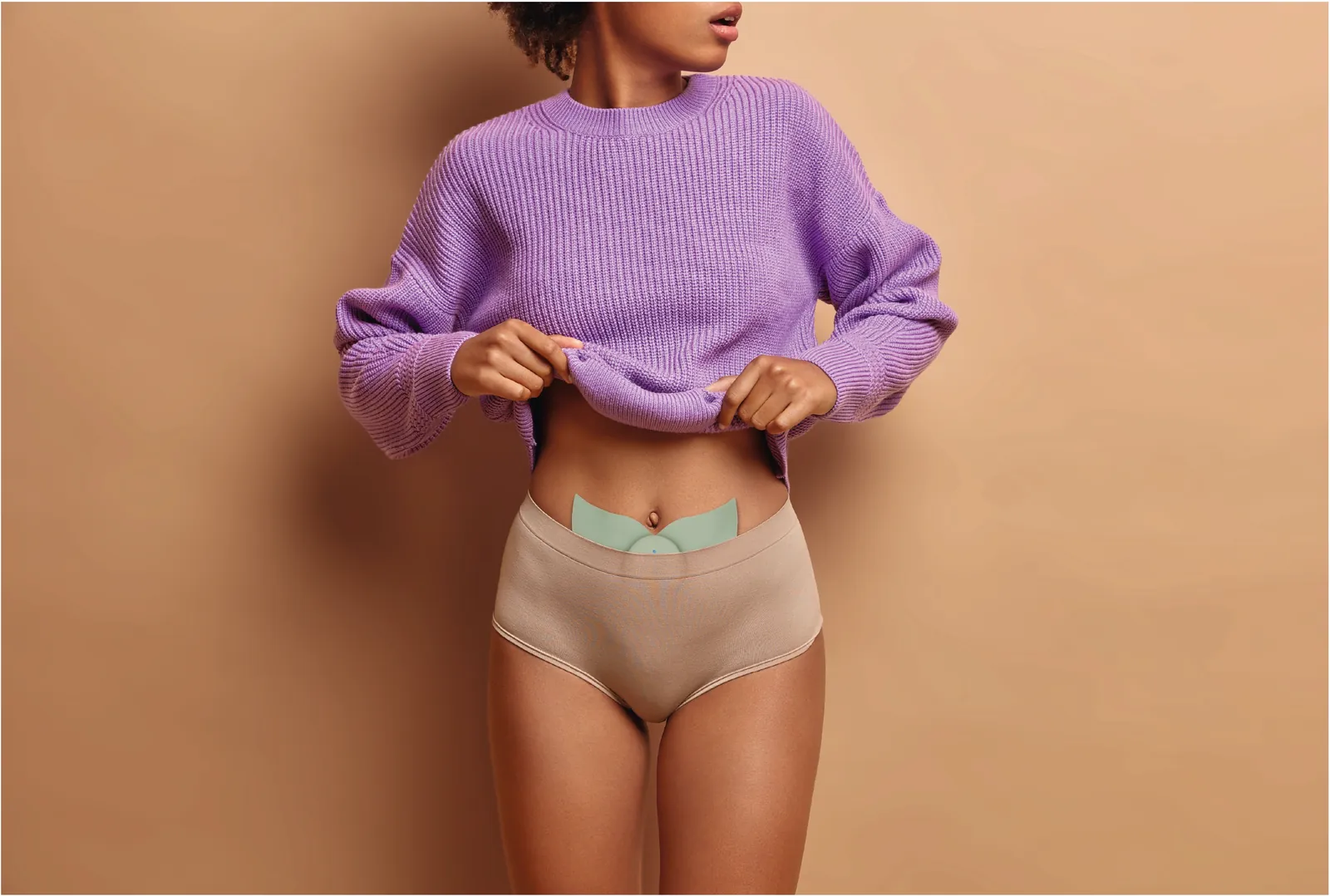
Heat is one of the best-supported home remedies. It relaxes the muscle of the womb and improves blood flow. Studies suggest heat can work about as well as a mild painkiller. A hot water bottle, a grain pillow or a warm bath are a good start. Self-adhesive heat patches you wear under your clothes are practical too.
Movement
Looking at your hot water bottle, this does not sound tempting. But gentle movement can release cramps and lift your mood. Walking, cycling, light jogging, yoga or stretching all work well. Regular movement across your cycle can even help prevent pain.
Diet and magnesium
A balanced diet with little sugar and alcohol suits many people. Magnesium has a reputation for relaxing muscles. The evidence is mixed, but trying magnesium-rich foods such as nuts, oats or pulses can be worthwhile. Drinking enough helps your body as well.
Relaxation
Tension and pain tend to feed each other. Breathing exercises, meditation or progressive muscle relaxation can break that loop. Enough sleep matters more than many people think.
TENS
With transcutaneous electrical nerve stimulation, or TENS for short, electrodes on the skin deliver gentle electrical impulses. On its effect in menstrual pain there is a Cochrane review that pools several randomised trials. TENS is an accepted, drug-free method. How it works in detail is explained in our article on TENS at the end of this piece.
Painkillers
For stronger symptoms, anti-inflammatory painkillers from the group of non-steroidal anti-inflammatory drugs can help, for example those containing ibuprofen or naproxen. They slow prostaglandin production and so act on the cause of the cramps. Take them early, as soon as the pain starts, and only for a few days. If you have stomach problems or other conditions, are pregnant or need them often, talk it through with your doctor or pharmacist.
When should you see a doctor about period pain?
Severe pain is not a price you have to pay for your cycle. As a rough rule: if the pain regularly knocks you out of your life, that is reason enough to have it checked. Please see a gynaecologist if any of these warning signs apply to you:
- The pain is so bad that you regularly cannot go to work, school or training.
- Common painkillers barely help or do not help at all any more.
- The pain gets worse from month to month.
- You have lower abdominal pain outside your period too.
- Pain occurs during sex, when passing urine or when opening your bowels.
- Your bleeding is unusually heavy, prolonged or irregular.
- You get a fever, nausea, vomiting or circulatory problems around your period.
- You are trying to conceive without success.
These signs do not automatically mean something serious is going on. They are a signal to look more closely. With possible endometriosis in particular, it often takes several years to reach a diagnosis. The sooner you raise your symptoms, the sooner you get answers.
How does the medical assessment work?
Before your first appointment you need nothing except the willingness to say honestly how you feel. Still, a little preparation helps.
Pain diary. Over one or two cycles, note when the pain comes, how strong it is and what helps. Record other symptoms too, such as nausea or pain when opening your bowels. A pattern on paper often says more than what you remember in the moment.
Conversation. Your doctor will ask about your cycle, how the pain develops, your contraception and your medical history. Dare to mention everything, including things that feel embarrassing. They matter for the diagnosis.
Examination. A gynaecological pelvic examination and an ultrasound often follow. These allow many possible causes such as fibroids or cysts to be assessed. Depending on what is suspected, further steps may follow.
This assessment is no reason to worry. It is a route to clarity. The aim is to find treatment that suits you and your life.
Why does your period suddenly hurt after stopping the pill?
Many people have their first natural period in a long time after coming off the pill. And it can feel very different from bleeding on hormonal contraception.
The reason lies in how many pills work. They suppress ovulation and keep the lining of the womb thin. Your body then produces fewer prostaglandins, and the bleeding is often lighter and less painful. What you experienced while taking the pill was, strictly speaking, a withdrawal bleed during the pill break, not the same menstruation as without hormones.
Once you stop, the natural cycle with ovulation returns. With it, period pain you may remember from before the pill can come back too. In many cases that is normal and settles over a few cycles. But if the pain is very severe, clearly increases or comes with other symptoms, the same warning signs apply as above. Then a visit to the practice is worth it.
Four stubborn myths about period pain
Plenty of half-truths circulate around periods. A few lines come up again and again, and some of them stick around even though they are wrong.
"You just have to put up with period pain." The classic, and it is wrong. There are good options for mild to moderate pain, from heat and movement to suitable painkillers. And severe pain belongs in a doctor's practice anyway, it is not a fate you breathe away.
"Exercise only makes it worse." Rather the opposite. Gentle movement can release cramps. Regular movement across your cycle can even prevent symptoms. Nobody is asking for interval training on day one, a walk counts too.
"After giving birth the pain is gone forever." For many people period pain does ease over the years or after a birth. It is no guarantee. If the pain stays or increases, that says nothing about your body being wrong; it is a reason to look more closely.
"The pill is the only solution." Hormonal contraception can ease period pain and is the right choice for some people. But it is not the only route. What suits you depends on the cause, your circumstances and what you want. You can talk that through calmly with your doctor.
This article is for general information and does not replace medical advice. If your symptoms are severe, unusual or persistent, please contact your gynaecologist.
FAQ
Is severe period pain normal?
In principle, period pain is not normal. Mild to moderate cramps are very common, though, and usually harmless. Pain that regularly takes you out of everyday life or does not respond to the usual measures is not normal and should be checked by a doctor.
What helps quickly against period pain?
TENS or heat often work fast, for example a hot water bottle or a TENS device. Gentle movement can release cramps. For stronger pain, anti-inflammatory painkillers can help, as can a TENS device designed for period pain.
Why do I have period pain but no bleeding?
Pulling in the lower abdomen without bleeding can occur around ovulation or shortly before your period. Other causes are possible too. With recurring or severe pain and no bleeding, get it checked by a doctor.
Can period pain change with age?
Yes. For many people primary period pain eases over the years or after giving birth. If pain is new or getting stronger, though, a physical cause may be behind it.
Does exercise really help with period pain?
For many people, yes. Gentle, regular movement can ease cramps and helps prevent symptoms across the cycle. You do not have to push yourself; a walk or light yoga is often enough.
How do I know whether endometriosis could be behind my pain?
Possible signs are very severe pain, pain outside your period, discomfort during sex or when opening your bowels, and trouble conceiving. These signs are not proof, but they are a good reason to have things assessed by a gynaecologist.
Is it bad to take painkillers every month?
Anti-inflammatory painkillers for a few days a month are acceptable for many people. But if you need them regularly at high doses or they barely work any more, talk to your doctor or pharmacist about the cause and possible alternatives.
Sources
- MSD Manual, Professional Edition: Dysmenorrhoea.
- Frauenärzte im Netz (German professional association of gynaecologists): heat and movement ease menstrual symptoms.
- Frauenärzte im Netz: exercise can help prevent menstrual symptoms.
- Institute for Quality and Efficiency in Health Care, Gesundheitsinformation.de: period pain.
- Institute for Quality and Efficiency in Health Care, Gesundheitsinformation.de: symptoms of endometriosis.
Discussion
Loading comments …